We were so captivated yesterday by Brent Nixon’s talk on orca that we want to see him again today. Today he’s talking about aurora, both the northern and southern lights. We enjoy a relaxed morning, reading, a cup of tea, and quiet relaxation. At around 10am we wander to the theatre for the talk.
Brent, in his unique style, explains the science and beauty of the aurora. It’s a phenomenon that starts almost a million miles from where you’re standing rather than in the sky above you. The sun constantly sheds a stream of charged particles called the solar wind, but every so often it has a much bigger event, a coronal mass ejection, essentially a billion tons of plasma flung outward at a million miles an hour, or as Brent puts it, the sun burping. When that burp reaches Earth, usually a day or two after we’ve seen the flare that caused it, our planet’s magnetic field catches the charged particles and funnels them down toward the poles, where they slam into the upper atmosphere and excite oxygen and nitrogen atoms, which glow as they settle back down, green and red from oxygen, blue and purple from nitrogen. That’s the light show.
Where you see it depends on how big the burp was. On an ordinary night the aurora sits in a ring around each magnetic pole, called the auroral oval, roughly 65 degrees of magnetic latitude, which is why Scandinavia, Iceland, and Alaska see it regularly and most of us never do. During a genuinely major solar storm that ring swells outward, and the lights can be seen much further from the poles than usual. The Carrington Event of 1859 is the benchmark for this, a storm so extreme that aurora were reported as far south as the Caribbean and telegraph systems around the world sparked and failed under the induced currents. More recently, in May 2024, a cluster of sunspots seventeen times the width of Earth fired off a run of coronal mass ejections that triggered the strongest geomagnetic storm in two decades, and for a couple of nights people as far from the poles as Mexico and southern Europe were watching the sky glow. The southern lights, aurora australis, work exactly the same way around the South Pole, they’re just far harder for most people to see, since there’s so little land down there to stand on and look up from.
Brent breaks down the science, describing that aurora emanate essentially from the sun burping. Then the particles interact with the Earth’s atmosphere, concentrating at the poles. He details where to see it and when it most likely will occur.
After the talk we relax in the Retreat for a while before lunch. Lunch for me is a chicken consommé and chicken sandwich, although the sandwich is more ham and bread and not a success. Mardi opts for a sea bass crudo for entree and ravioli for main. Again her meals aren’t to the usual standard. We joke that it’s Sunday and chef might be having a day off.
After lunch we take part in a trivia event in the Retreat Lounge. We score 11 out of 20. The questions are very suited to the mainly American passengers, with multiple questions about US presidents, states, and sport, so we aren’t too unhappy with our score. Mardi, towards the end of trivia, is feeling a bit unwell, so we head to our room. She spends the afternoon napping. I head off to progressive trivia, round 2. Our team is there, we met Debbie and Geoff yesterday. We do ok, scoring 13 out of 20 today, and we’re currently in second place. Progressive trivia runs through to the end of the cruise.
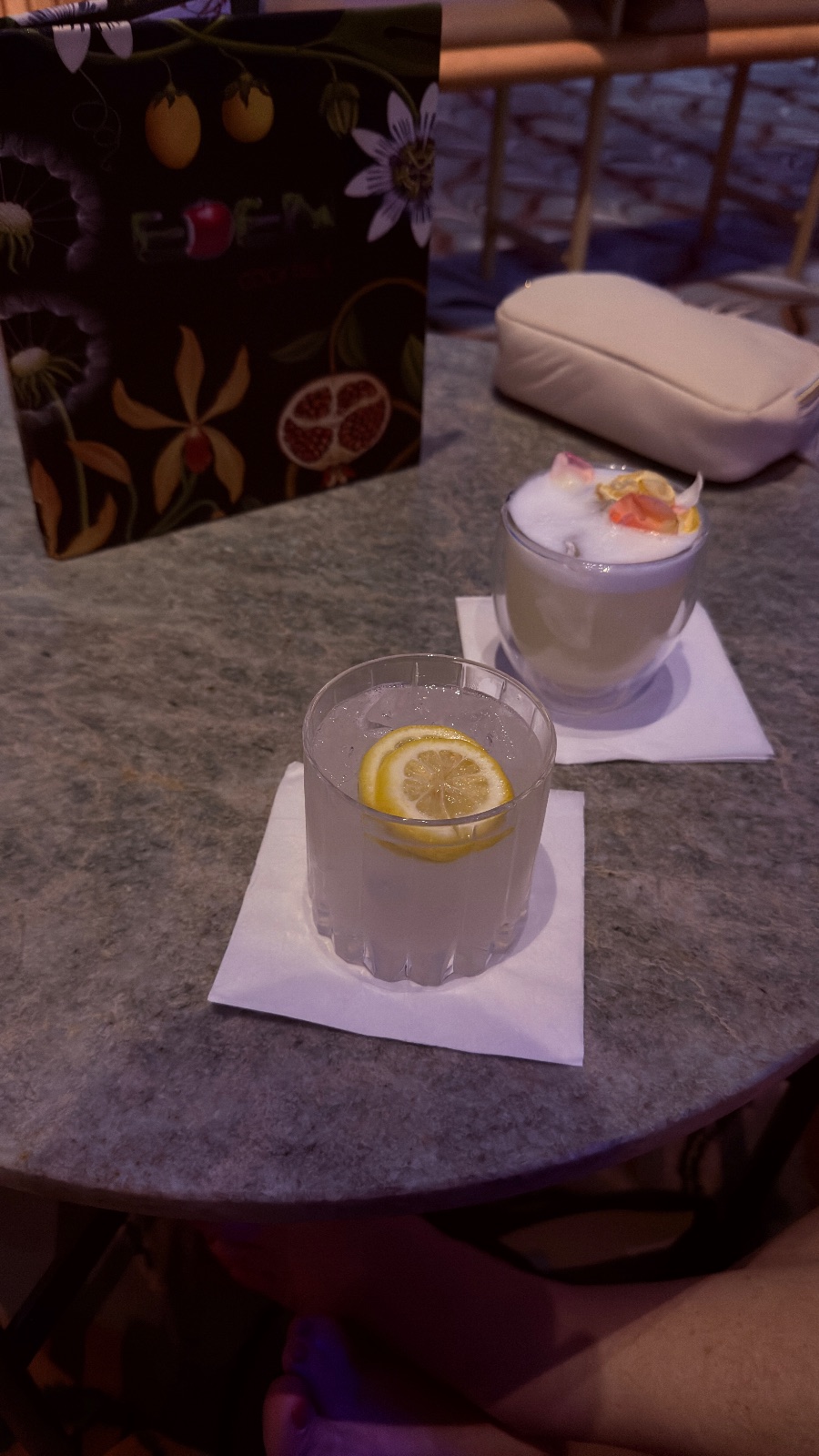
After trivia, back in the room, Mardi is feeling a bit better. We grab a snack, delivered to the room, we hardly had any lunch given it wasn’t any good. The food gives Mardi some pep and we venture out to Eden. Eden is a bar and cafe at the back of the ship with sweeping aft views. We enjoy a cocktail and sit and watch the wash as the ship continues cutting its way to Hawaii.
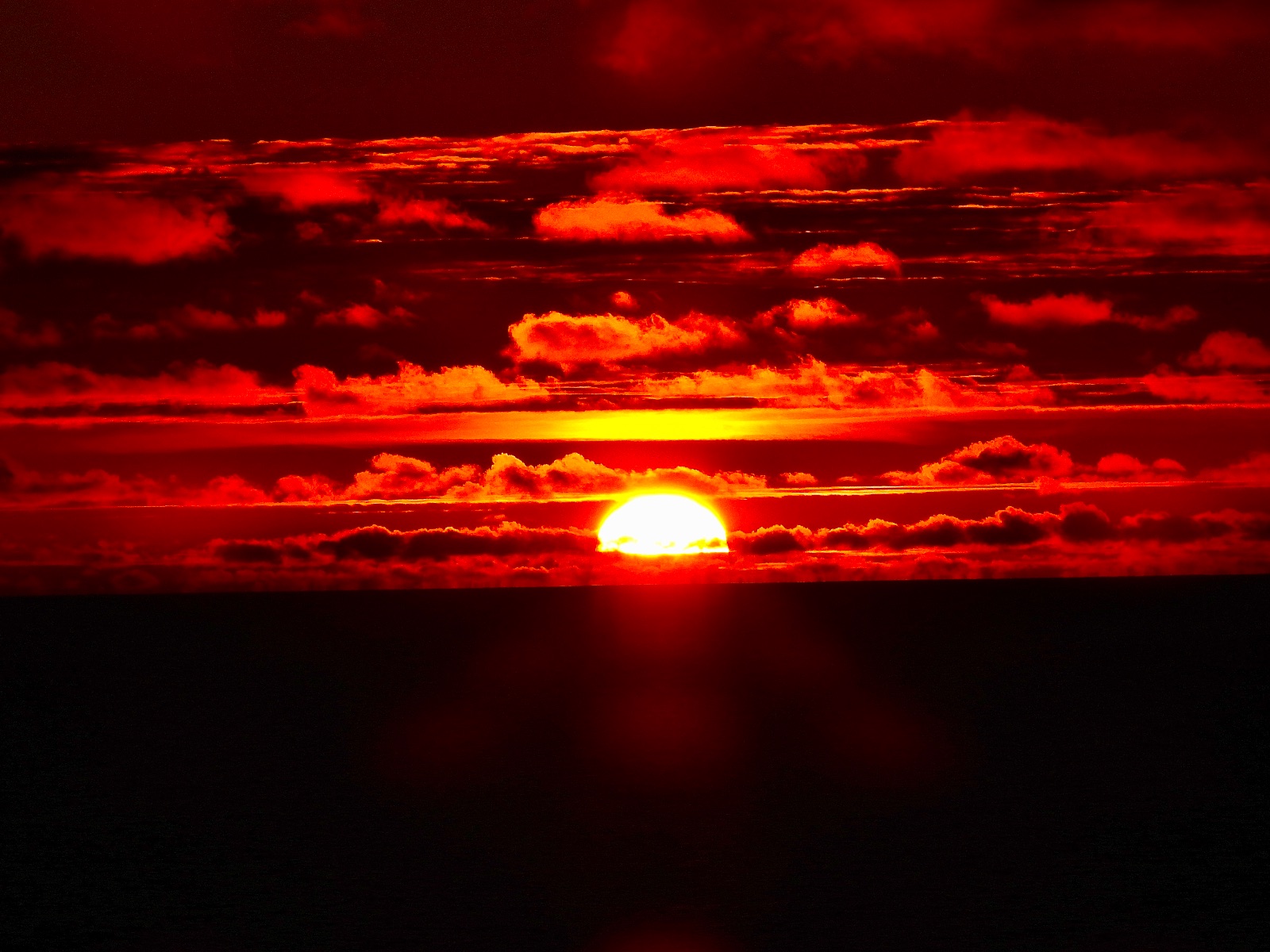
Today the ocean below us goes to a depth of 3,500 metres. The expanse of water is mind boggling. All we see is water, no other life of any type except the life on Edge. We continue southwest at a steady 18 knots. The ship leaves a trail of white water behind us, and as the sun begins to meet the horizon over our left shoulder, we head to our cabin. I take a few photos of the awesome sunset. A clear sky, calm water, and the burning orange slowly dipping below the horizon as we transition from light to dark. I stand and enjoy the transition for a few minutes. It’s an amazing sight, the calmness, the only sound the wash of the water below me.
We head out for a quick dinner. Again the food is not the best. I opt for duck breast, it’s a bit tough. Mardi enjoys some scallop crudo, which is nice. We have a quiet night in. I catch up on some work, meeting with staff over Teams and handling some email. Then some reading and relaxing before bed. Another 25 hour day tomorrow as we progressively cruise our way to the International Date Line.