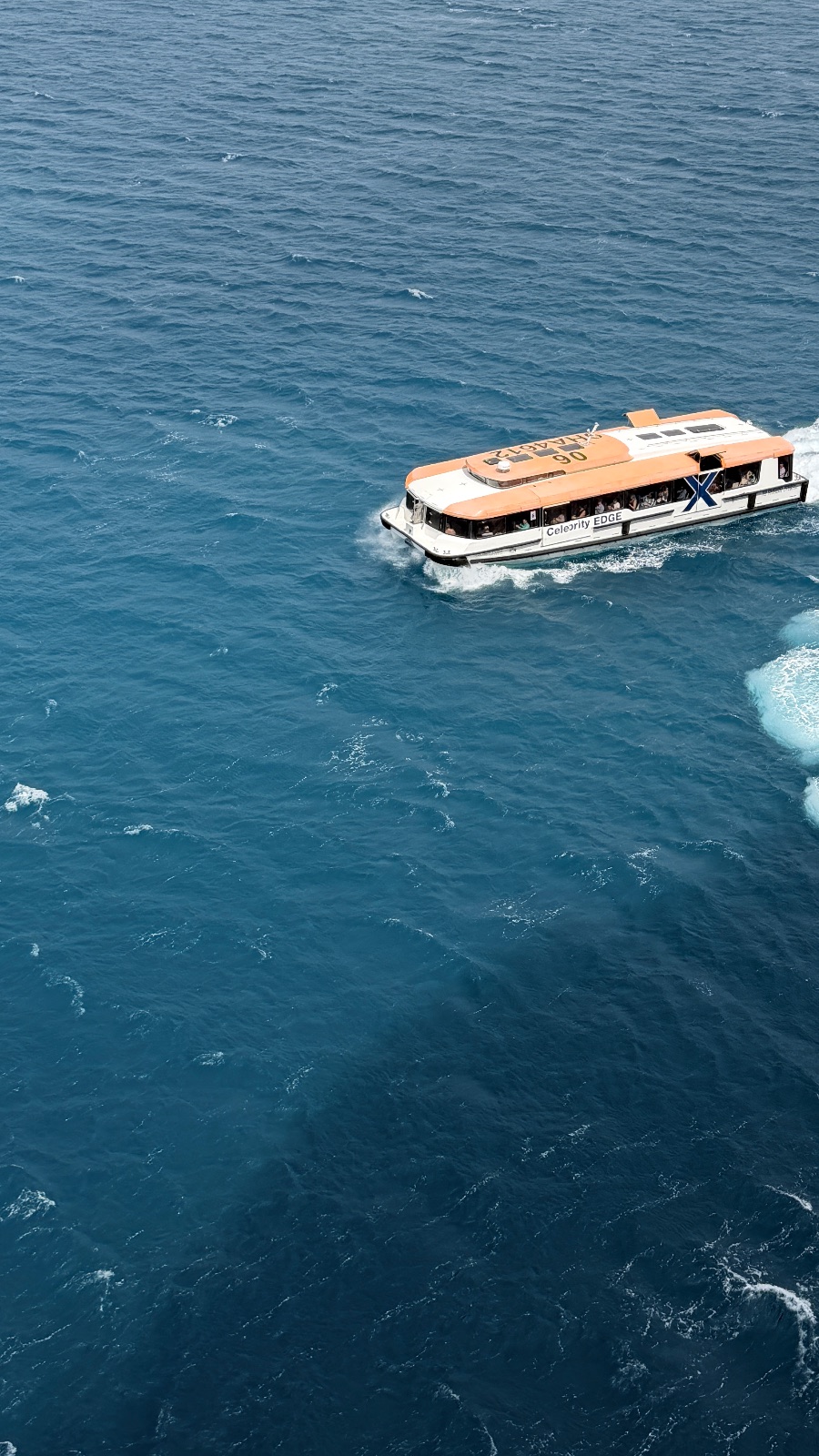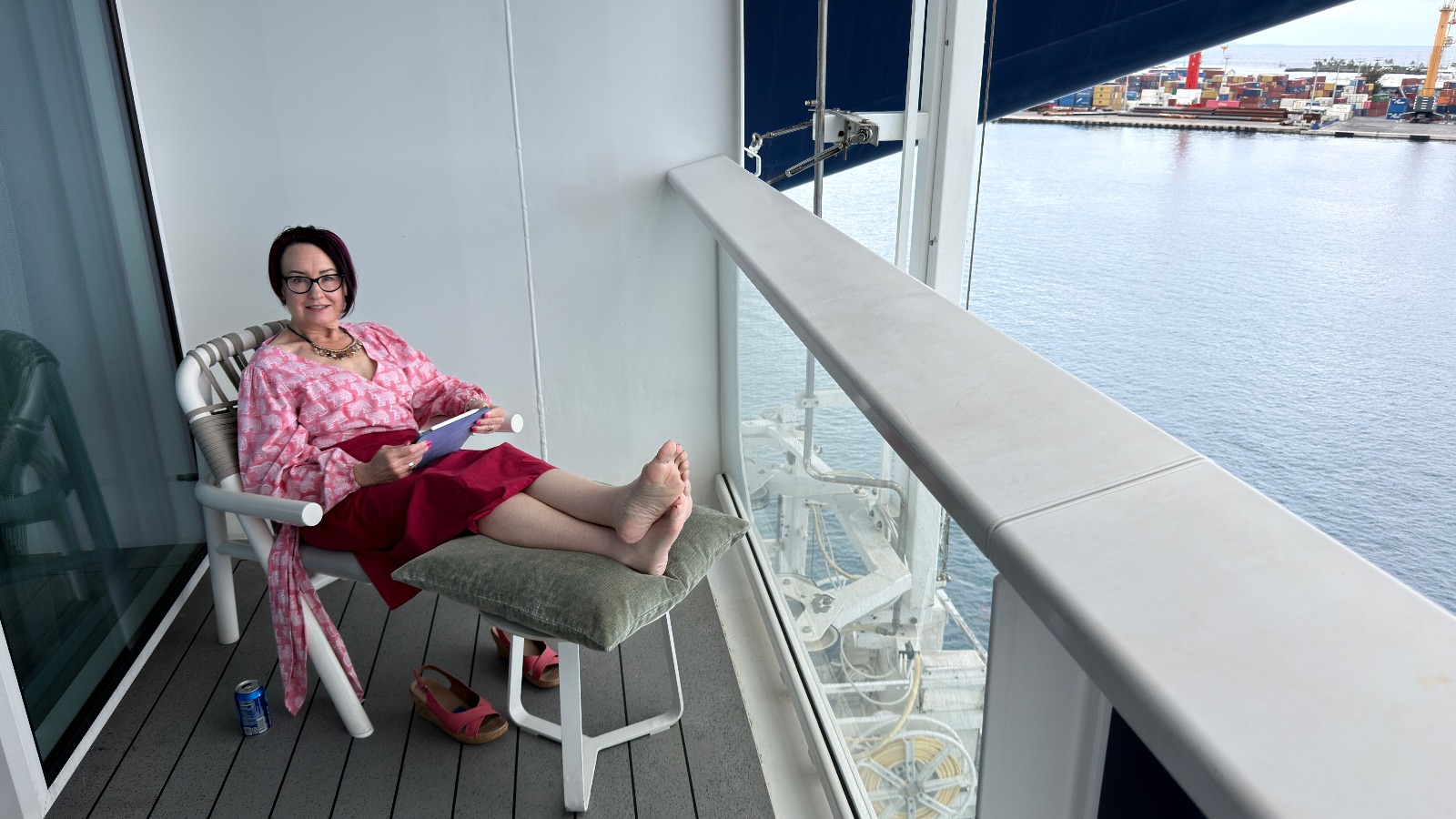
Another morning with a new view. We arrive into port about 6am, Papeete, Tahiti. We’re berthed in an industrial, busy part of the harbour. The Port of Papeete has been developing in one form or another since the early 1800s, when European traders and missionaries first began using the harbour, and it became a formal public port authority in 1962. These days it handles everything from inter-island ferries and container shipping to superyachts and, increasingly, cruise ships, and a new international cruise terminal, Te Anuanua, opened here in 2025 after a $19.5 million upgrade, specifically to cope with growing passenger numbers. We’ll be here for about 30 hours, an overnight stay before we head out tomorrow around midday.
This morning we have our usual quiet start. At around 10:30 we head off the ship. The dock is on the port side, and as we leave there are rows of recreational boats lined up in the slipway near the dock. We wander the length of the port and within minutes are in the town proper. A five-minute walk brings us to the large market. It’s actually one of the oldest institutions in Papeete, founded in 1847 and sitting on the very same block ever since, which makes it older than most of what’s grown up around it. The current covered hall dates from 1987, over 7,000 square metres of it across two levels, and locally it’s still known by its original name, Mapuru a Paraita. It’s teeming with people, a mix of locals, in the minority, and tourists from the cruise ship as well as the nearby airport. The market offers the usual Tahitian trinkets, jewellery, carved wooden ornaments, clothing, food, flowers, and more. We wander for a while, I buy some chilli salt and lime salt. Yum.
Mardi has done her homework, and as we leave the market we find three fabric shops within ten minutes. These shops invariably are attached to tailors and carry a host of brightly coloured fabrics. Mardi finds a few more designs as we move from shop to shop.
The area is generally dirty. The pavement is uneven and very narrow. The air is filled with a mixture of exhaust fumes from the thousands of bikes weaving in and out of traffic, plus garbage, cigarette smoke, and the smell of a generally unkempt city. There are also a large number of beggars and homeless folk about. After we finish looking around we search for somewhere for lunch, but nothing grabs our eye. We wander through a supermarket and a chemist, then decide to head back to the ship. I’m sure there are parts of this island that are lovely, given its popularity with Australian tourists, but I suspect that’s the resort set. The city itself is certainly far from resort-like.
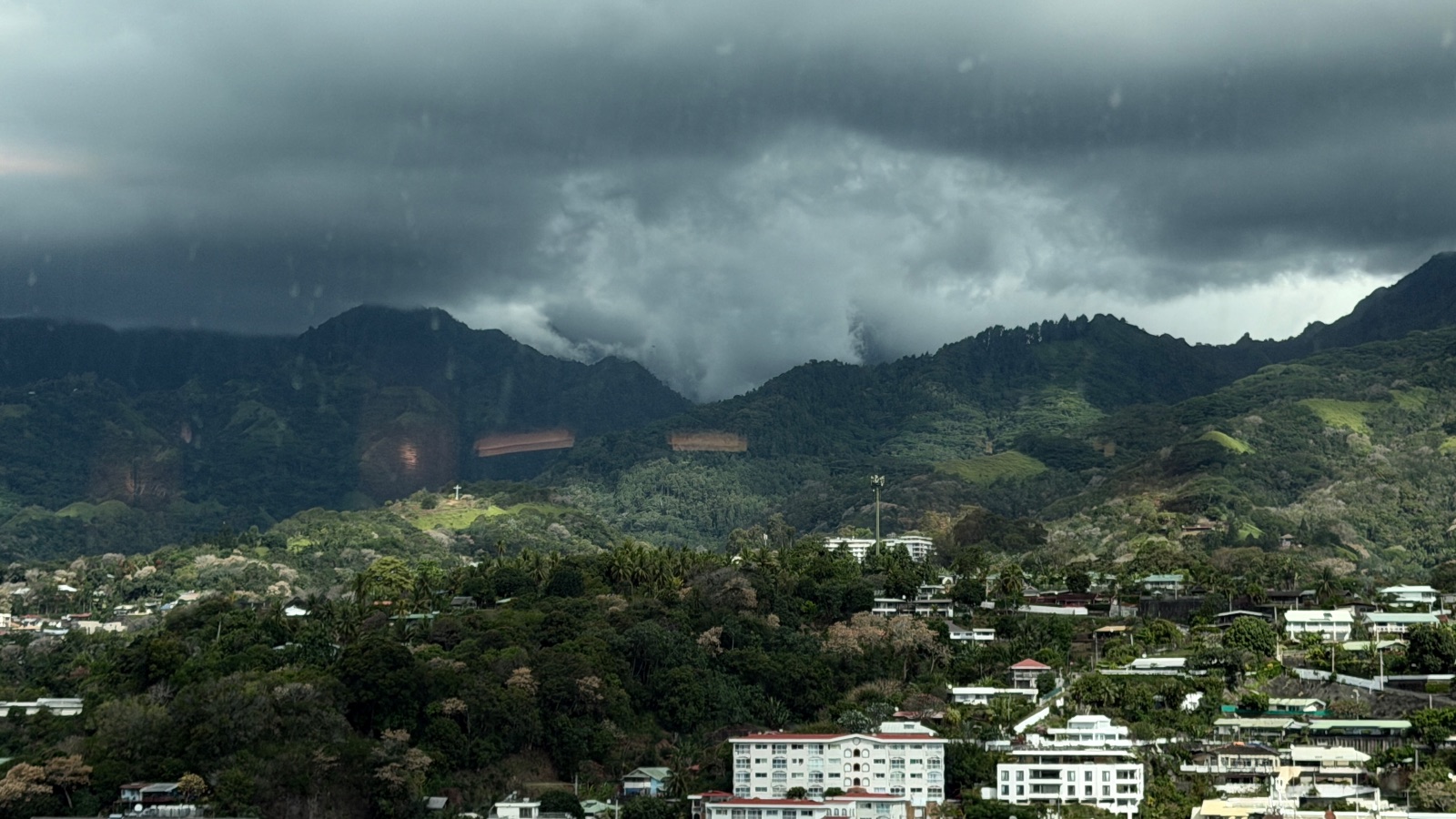
Back on the ship we have a quick lunch at Mast Grill, a burger and hot dog. We grab a dessert and head to the lounge. Sitting on the port side looking through the panoramic windows, we have a view of the island proper. Rows of catamarans line the dock, which then gives way to the city streets hugging the water’s edge. The city quickly surrenders to mountains that rise to around 2,000 metres, with the ever-present cloud cover hovering above.
We’ve noticed something at every island so far. Look inland and there’s a thick bank of cloud sitting on the mountains. Turn around and look out to sea, and the sky is clear blue. Same here in Papeete. From the ship, the peaks behind the town are wearing a heavy white hat while the harbour sits in full sunshine.
It turns out the cloud isn’t parked there at all. The trade winds carry warm, damp air across thousands of kilometres of open ocean, and then Tahiti gets in the way. With peaks over 2,200 metres, the air has nowhere to go but up. It cools as it climbs, the moisture condenses, and a cloud forms. Once the air drops down the other side it warms again and the cloud vanishes. So the cloud is constantly being made at one end and unmade at the other. The air moves through it, and the cloud stays put.
Polynesian navigators knew this trick well. A cloud that doesn’t move on the horizon means land underneath it, long before you can see the island itself. A thousand years on, we’re doing the same thing from deck 10 with a cocktail, which feels like cheating.
After a restful couple of hours we head to the room, more work to do and a meeting with my team.
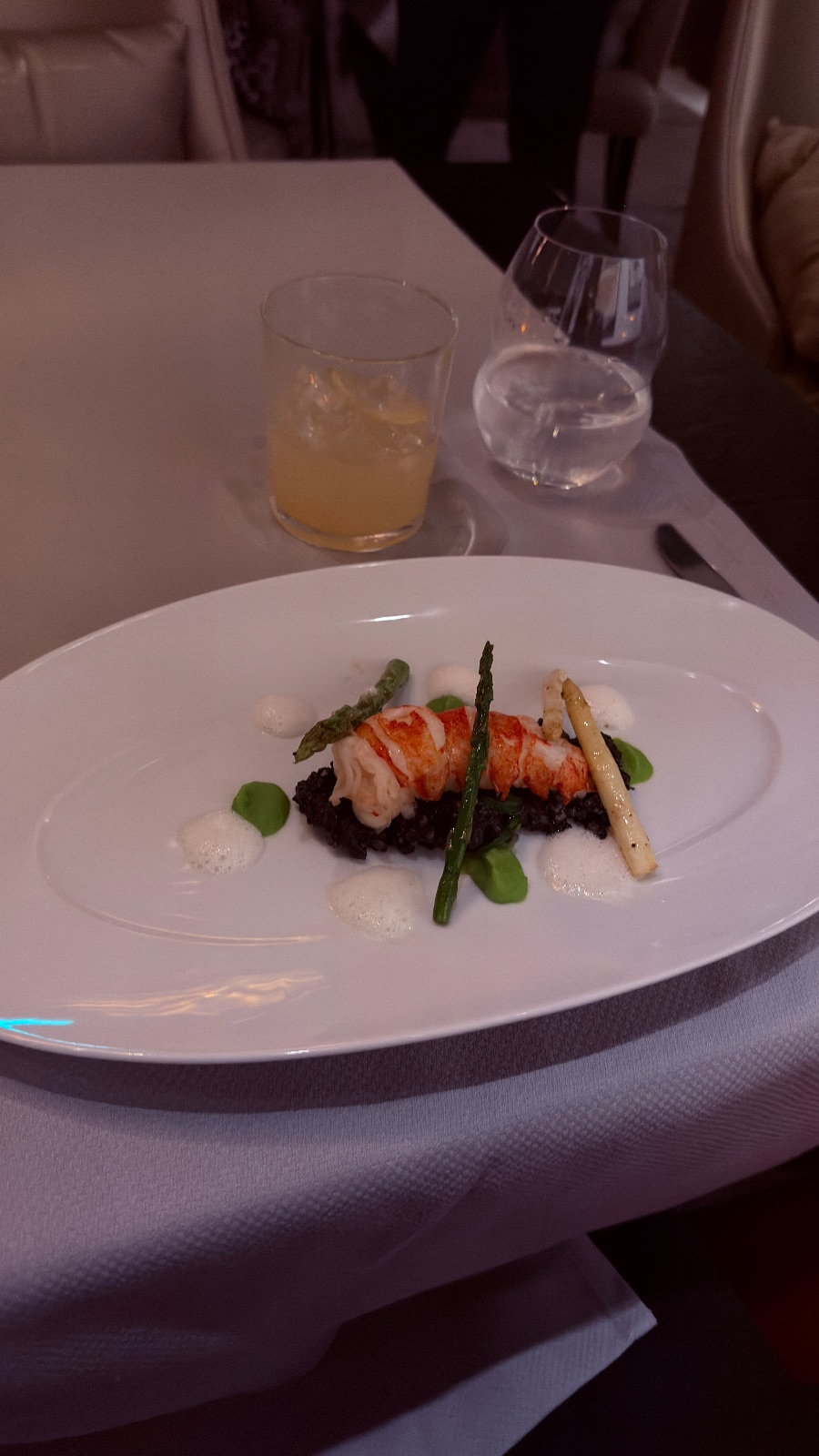
After work is done we head to dinner around 7:20. As we wait to be seated, Aldo and Rosina bump into us, a couple from Rose Bay, who we sat adjacent to a few days ago and struck up a conversation with about the NRL, they’re avid Roosters fans and my mum and dad were Rose Bay, Bondi locals. We chatted about the footy then, and saw them again briefly after the grand final, they were pleased with the result.
So tonight we invite them to join us for dinner, since we both arrived at the same time. What a great night. We kept the footy talk to a minimum but had some great travel tales to tell. We talked family, retirement, and solved the problems of the world. It’s rare that Mardi and I meet and interact with fellow passengers, but we seemed to hit it off with these two straight away, down to earth, sharing similar values and views to us, besides being Roosters fans.
After a couple of hours we bid farewell and head home. Katarina pops in and greets us with a nightcap. Tomorrow we start our next four days at sea as we head to New Zealand, the International Date Line awaits before then.